

Educational Materials
Resources at your fingertips...
FRS provides pertinent educational materials for both the telecommunications community and the general public. Materials range from telecom-related white papers to informational DVDs and mailers that can be used by schools, local businesses, and government agencies. Many of our products and materials are free of charge, while others are available for purchase.

Delivering Broadband From Beginning to End
The COVID-19 pandemic highlighted the deficiencies in broadband infrastructure and availability of reliable, high-speed services in many rural areas as compared to services available in the more densely populated urban areas of the United States. Broadband is essential and crucial for communication, education, healthcare, entertainment, commerce, AI, XR, and more.
The paper outlines the many steps an internet service provider (ISP) must take to deliver new, reliable, high-speed services to homes, businesses, and communities in rural and tribal areas.

Understanding Childcare Challenges in Rural America
In collaboration with TPMA, this new white paper addresses the lack of affordable and available childcare for families, businesses, and communities, especially in rural America. The paper outlines current and emerging childcare models, provides recommendations for those at the state, local, employer, and childcare-facility levels, and includes examples of successful initiatives NTCA members have implemented in their communities.

Glossary of Rural Telecom Terms
The world of telecommunications is filled with complicated terminology. Knowing this, FRS developed a helpful glossary to aid consumers and policymakers alike in navigating the industry’s lexicon—and added an overview of the history of the Universal Service Fund as well for context. Enjoy!
Updated: September 2024
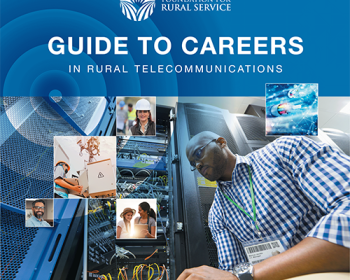
Guide to Careers in Rural Telecommunications
The Guide to Careers in Rural Telecommunications provides a look into jobs and positions you might find at your rural telecommunications provider. This is an excellent resource for companies to show a wide range of job opportunities for high school and college students in rural communities.
Print PDF Get Printed Guide to Careers
Future Proof: Economics of Rural Broadband
COMPARING TERRESTRIAL TECHNOLOGIES & INVESTMENT CONSIDERATIONS TO MEET INCREASING CONSUMER BROADBAND DEMANDS
A white paper that examines the key technical, deployment, and investment characteristics of each broadband technology in the context of an actual “greenfield” rural case study area to illustrate the short- and long-term economic considerations. Prepared by Vantage Point Solutions, Inc. for the Foundation for Rural Service.
Download the Paper Download the Summary Infographic
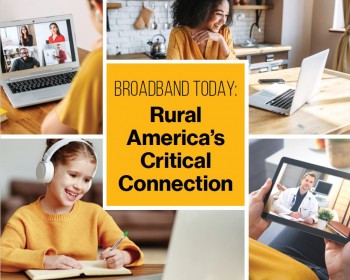
Broadband Today: Rural America's Critical Connections
A new white paper, Broadband Today-Rural America's Critical Connections, provides a basic overview of broadband and explores how the pandemic has impacted broadband providers and consumers in the important areas of remote learning, working from home, telehealth, business and consumers, and social connections. The paper also explores issues such as the technologies used to provide broadband and policy reforms that could impact the future of broadband deployment. Many thanks to the support of RTFC, whose generosity made the project possible, and to WordSouth and VantagePoint for preparing the report.
Job Creation From Rural Broadband Companies
Commissioned by the Foundation for Rural Service and written by the Purdue Center for Regional Development, this white paper demonstrates the positive job creation and retention impacts of rural broadband providers as well as the far-reaching economic impacts arising from those jobs.
Major Findings Include:
- 77,000 Multi-sector jobs generated by small telco providers in 2017
- $10 billion economic output from industries powered by rural broadband
- $2.35 billion in compensation for workers
A Cyber Economy: The Transactional Value of the Internet in Rural America
This report examines the nature and quantifiable value of online transactions, and draws comparisons between online usage habits among urban and rural consumers. The report was produced by iGR, a market strategy consultancy focused on the wireless and mobile communications industry, and commissioned by the Foundation for Rural Service (FRS).
Major findings include:
- Internet usage among urban and rural consumers is largely similar.
- Rural consumers are responsible for approximately 15% of all consumer, internet-driven transactions annually, which equates to more than 10.8 billion online transactions altogether.
- Internet-driven transactions make up nearly 50% of U.S. gross domestic product (GDP) or $9.6 trillion annually. These transactions are estimated to grow to more than 65% by 2022, to $14 trillion per year.
- The estimated value of rural online transactions is nearly $1.4 trillion—or 7% of GDP.


Lifeline: Yes, You Can Afford Telephone or Internet Service
The Lifeline program is available to eligible low-income consumers in every U.S. state, territory, commonwealth and on Tribal lands. In 2016, the Federal Communications Commission adopted a comprehensive reform and modernization of the Lifeline program that began to include broadband as a support service. This educational pamphlet was created to help telecommunications providers educate consumers on their Lifeline options.

The Economic Impact of Rural Broadband
This study, commissioned by FRS and written by the Hudson Institute, takes a look at the direct and indirect economic effects of the rural telecom (or broadband) industry on Gross Domestic Product, as well as the economic impact of rural broadband on other industries.
Major findings include:
- Rural broadband supported over $100 billion in e-commerce.
- While economic activity accrues both to the rural and urban areas, more of this benefit goes to urban areas.
- The rural broadband industry supported 69,595 jobs.

Aging in Place
The report focuses on advancements in telemedicine and how this digital method of bringing patients and health care professionals together via high-speed internet connections is helping reverse the growing trend toward private nursing home care and assisted living among rural seniors. The white paper highlights a number of telehealth applications enabled by rural telcos, including videoconferencing capabilities, remote health monitoring services, and systems that transmit large digital files such as X-rays between technicians, specialists or primary care providers.

Rural Economic Development: Building a Sustainable Community
This report defines rural economic development, offers reasons why rural local exchange carriers should be involved in economic development, provides examples of ways that carriers can get involved, and highlights important resources for development in rural communities.

Rural Education
Did you know… that new standards of online testing for schools could put rural areas at a major disadvantage if they do not have readily available broadband in their communities?
Did you also know… that many rural areas are already using broadband technology to enhance their curriculum and provide opportunities to students that they would not be able to offer otherwise?
This report focuses on the critical need for broadband in rural schools and the diverse applications that can enhance learning in rural America.

Smart Agriculture
Broadband is vital for rural farmers to own and operate efficient businesses. The uses for broadband have transformed over time. Wired and wireless devices can now be used to monitor and track soil moisture, crop readiness, land conditions, and weather; buy and sell livestock online; check market reports; and much more.